 quorum
Guides
Machine safety rules, explained in plain language.
Each guide starts from nothing: what the thing is, why it matters, and how to handle it, with pictures. No background in safety engineering needed.
 Basics
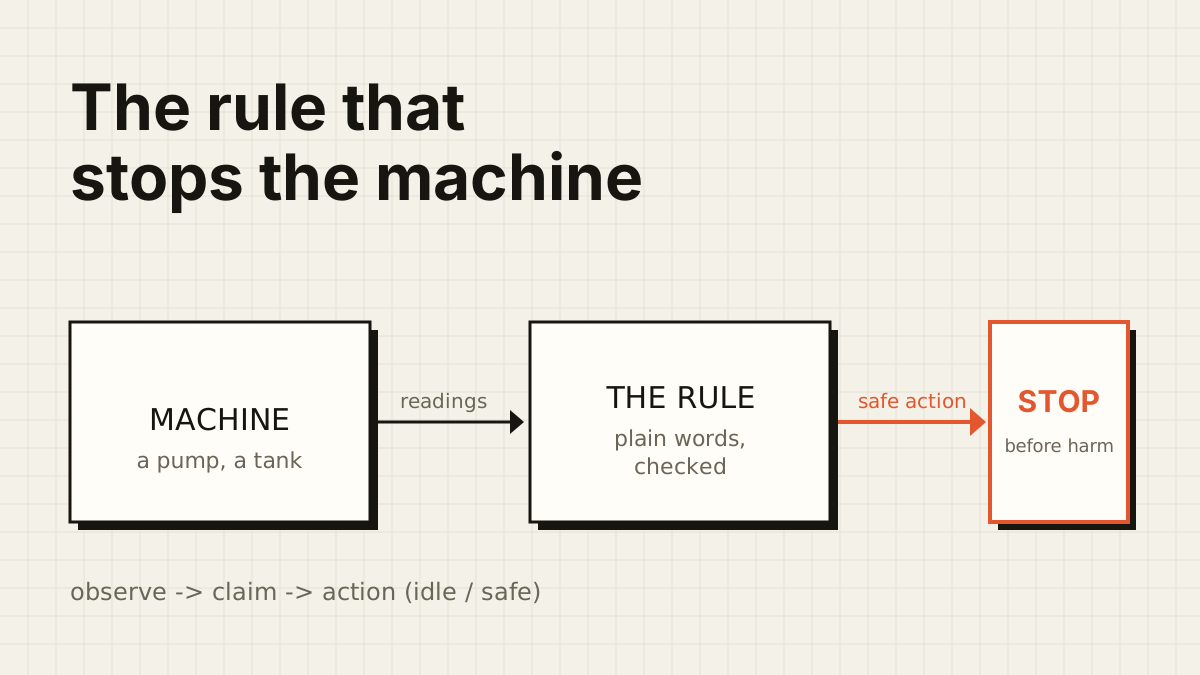
Interlocks explained: the rules that stop a machine before it hurts itself
What an interlock is, the idea of a safe action, alarms versus shutdowns, and how quorum writes a rule a person can read and check.
Read the guide →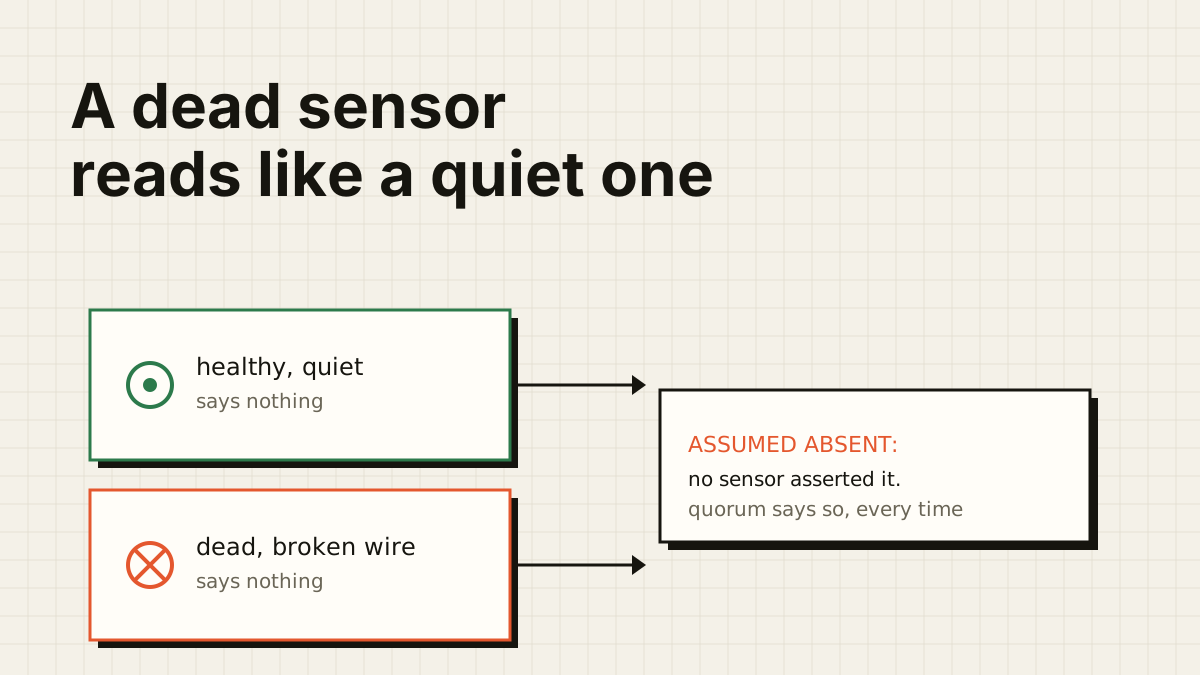 Sensors
A dead sensor reads like a quiet one: how to write rules that notice
A failed sensor reads just like a quiet one. How quorum writes rules that notice the difference, and shows the assumptions behind every answer.
Read the guide →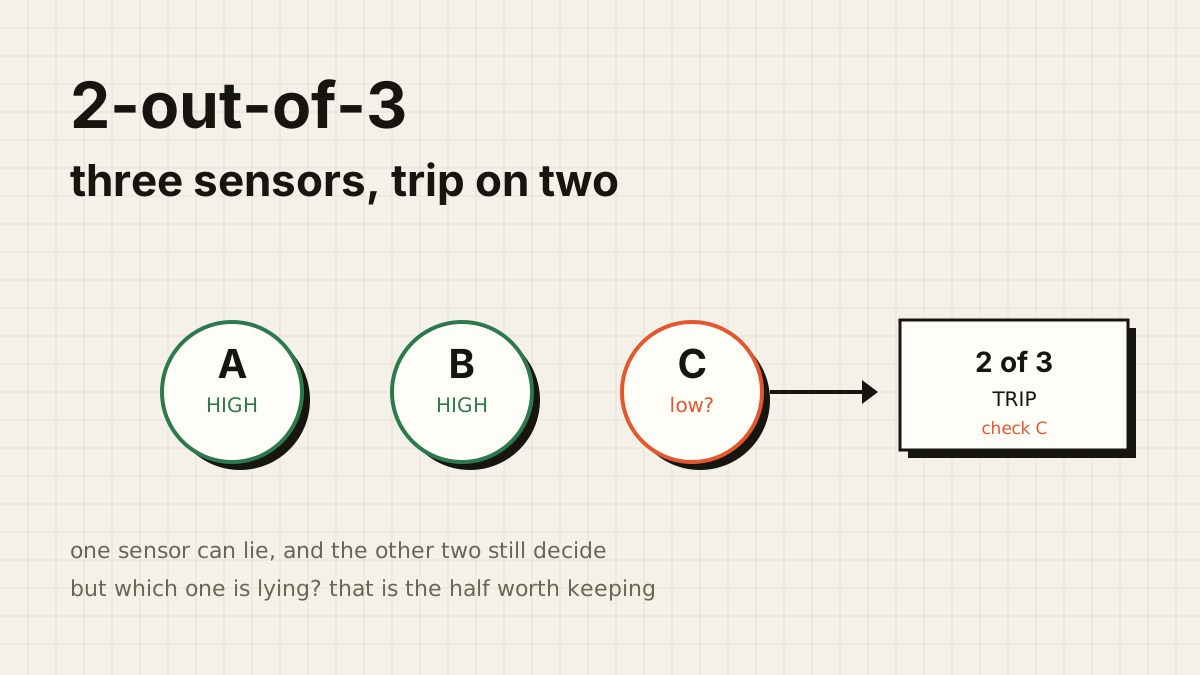 Voting
2-out-of-3 voting: why plants use three sensors, and what goes wrong when one lies
Why plants use three sensors and trip on two, what a spurious trip and a missed trip are, and how a voted function can quietly collapse to a single sensor.
Read the guide →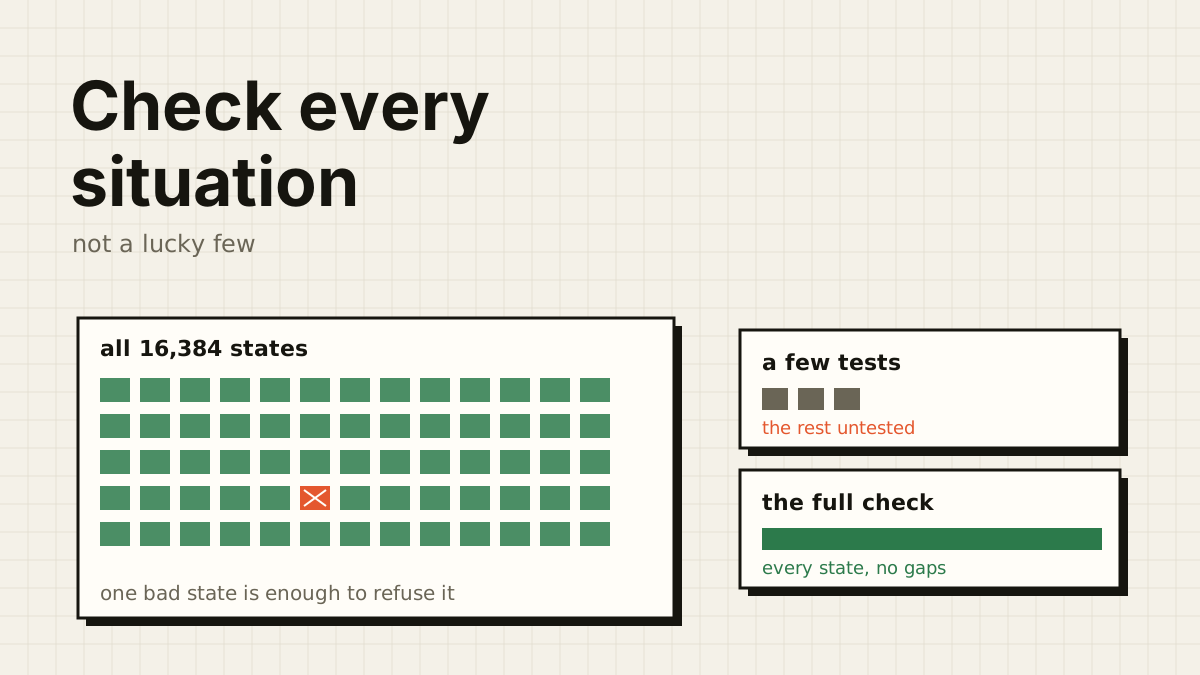 The full check
Why a safety rulebook should be checked against every situation, not tested on a few
Testing a few scenarios cannot cover a safety rulebook. quorum checks every combination of readings before the rules go near a machine.
Read the guide →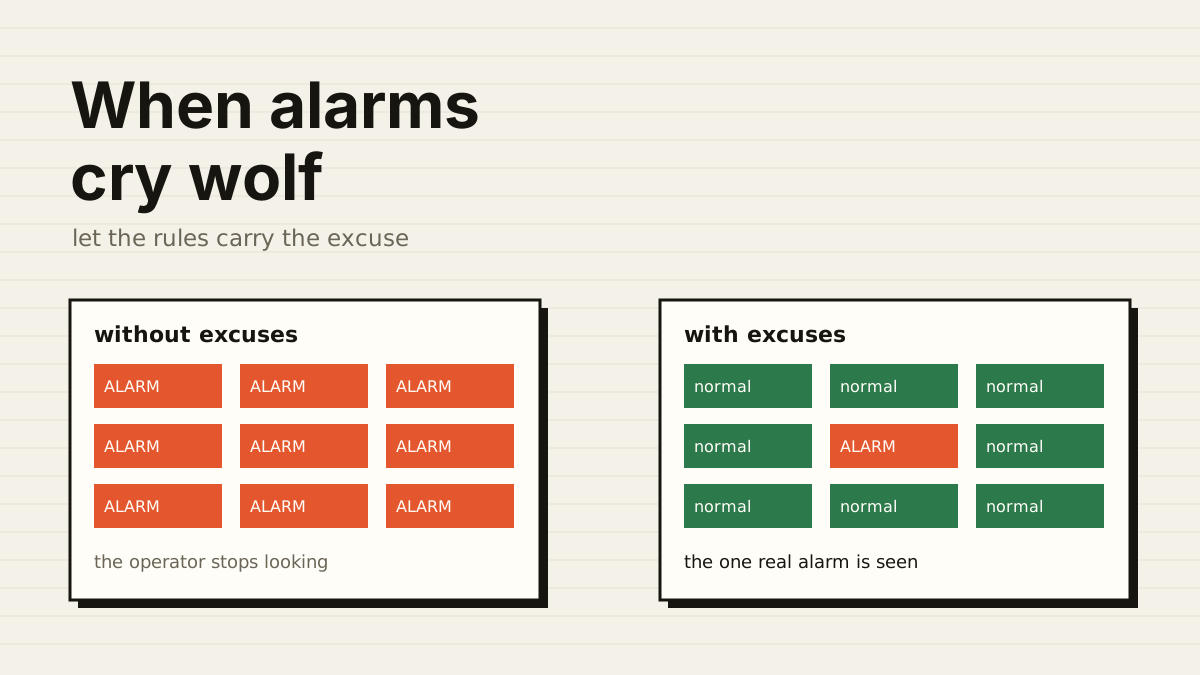 Alarms
Nuisance alarms: why operators stop listening, and how excuses in the rules help
Too many false alarms and operators stop listening. Benign explanations written into the rules keep an alarm quiet until it matters.
Read the guide →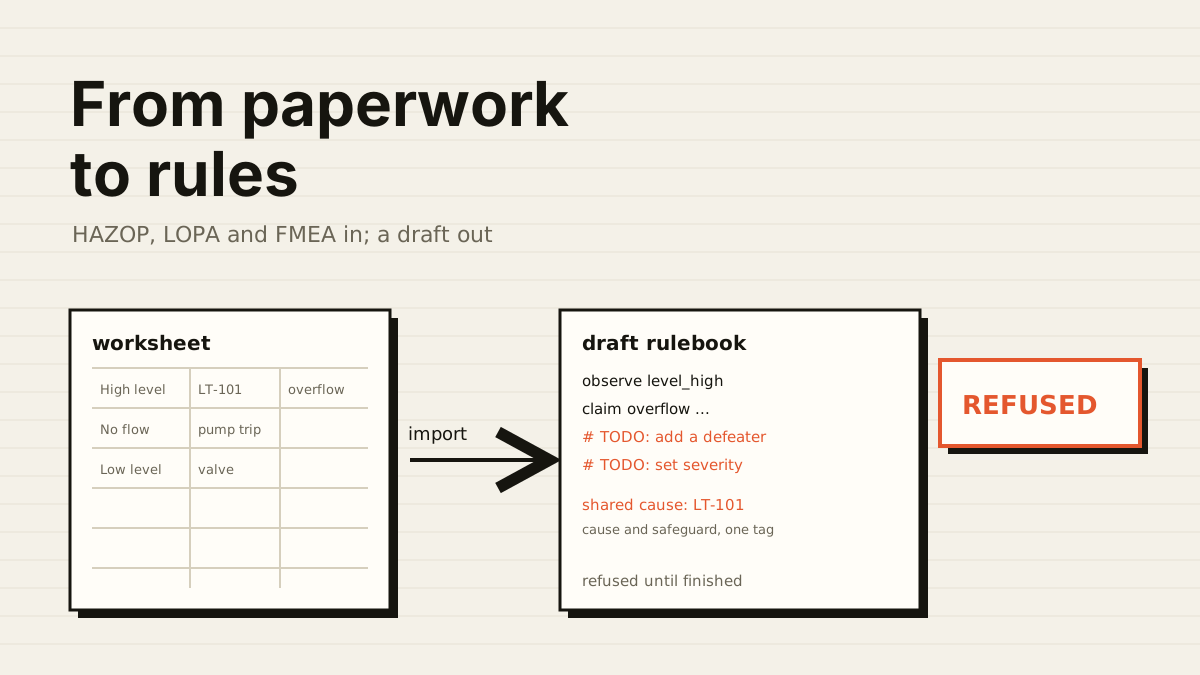 Worksheets
From HAZOP, LOPA and FMEA worksheets to rules a machine can run
quorum imports HAZOP, LOPA and FMEA worksheets into a draft rulebook, flags the gaps, and refuses it until an engineer finishes it.
Read the guide →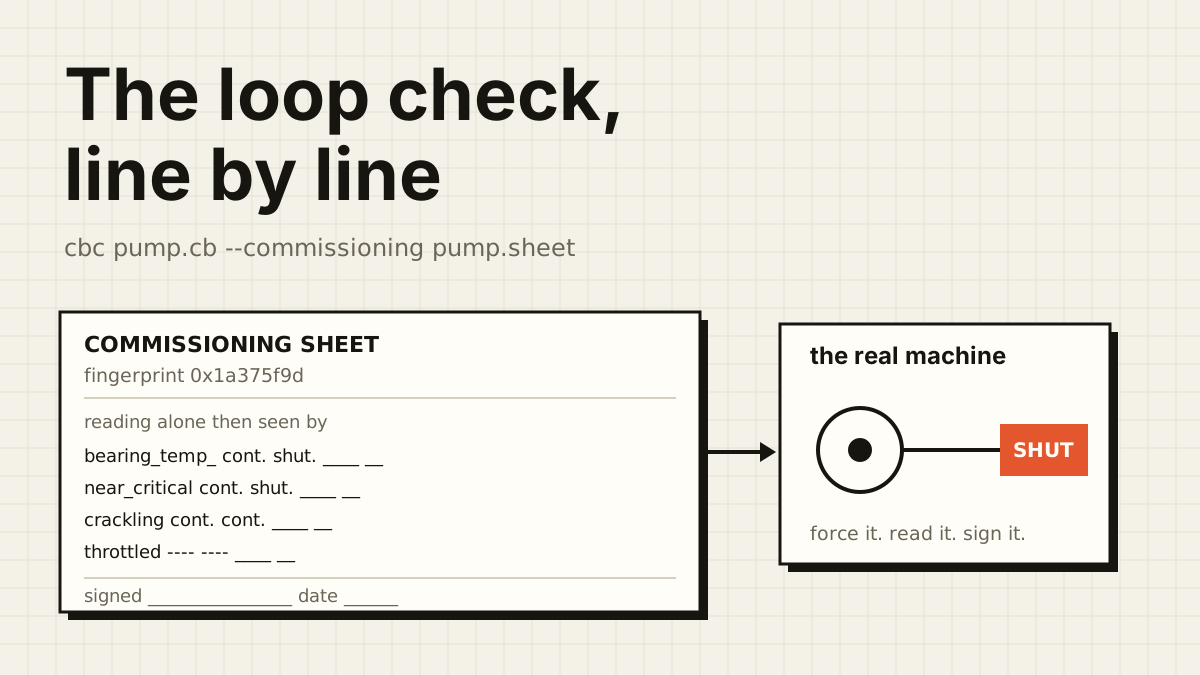 Commissioning
 a rulebook: the loop check, line by line
A rulebook that passes every situation still has to meet the real machine. The commissioning sheet is the loop check, line by line, with sign-off.
Read the guide →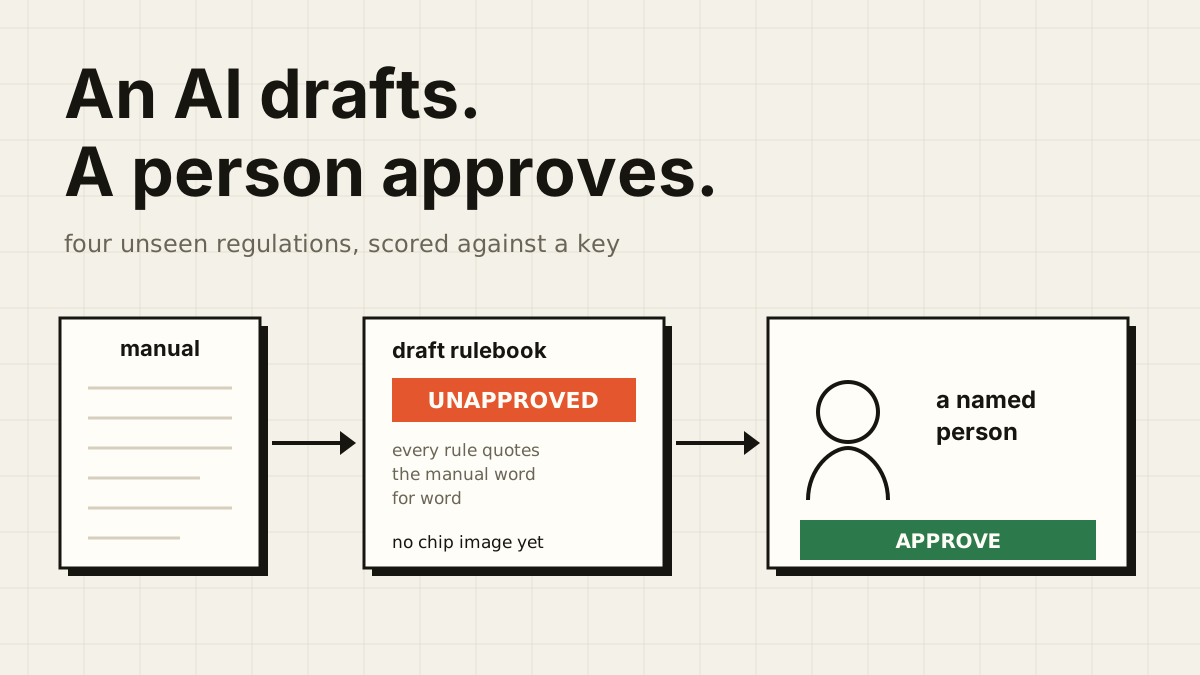 AI drafting
Can an AI draft safety rules from a manual? A fair test on four regulations
An AI can draft a rulebook from a manual, but only a person may approve it. Here is a fair test on four regulations the model had never seen.
Read the guide →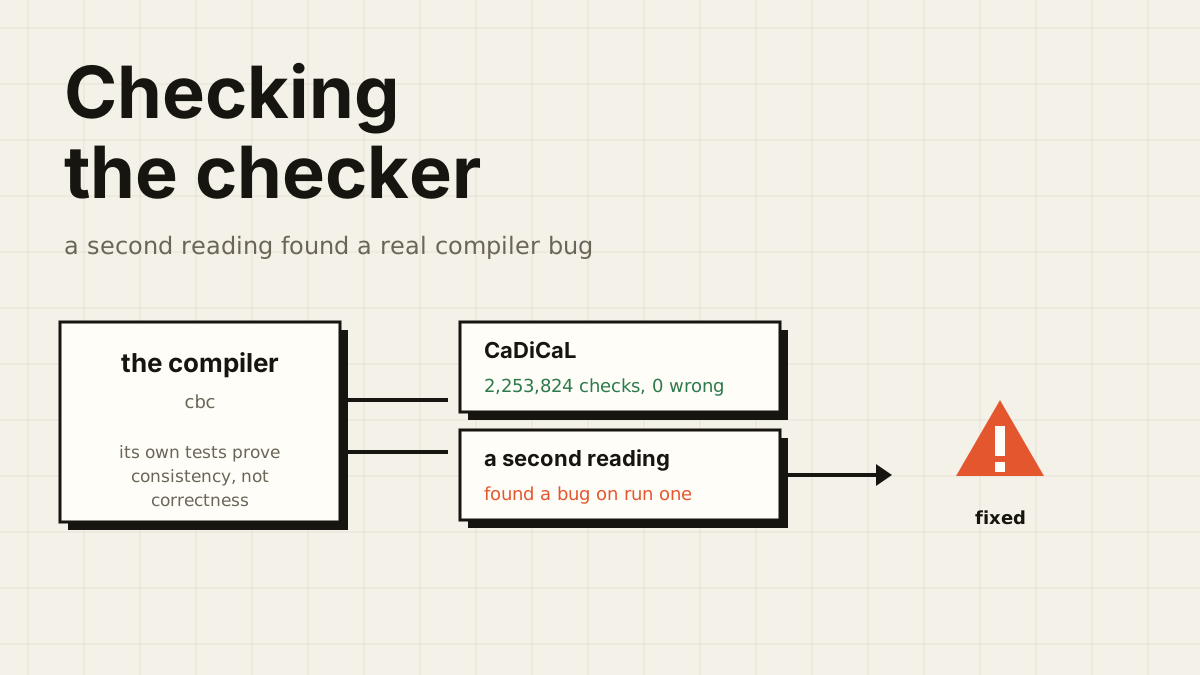 Verification
Checking the checker: how a second implementation found a compiler bug
Tests written by the same team prove consistency, not correctness. A second, independent implementation of the language found a real compiler bug.
Read the guide →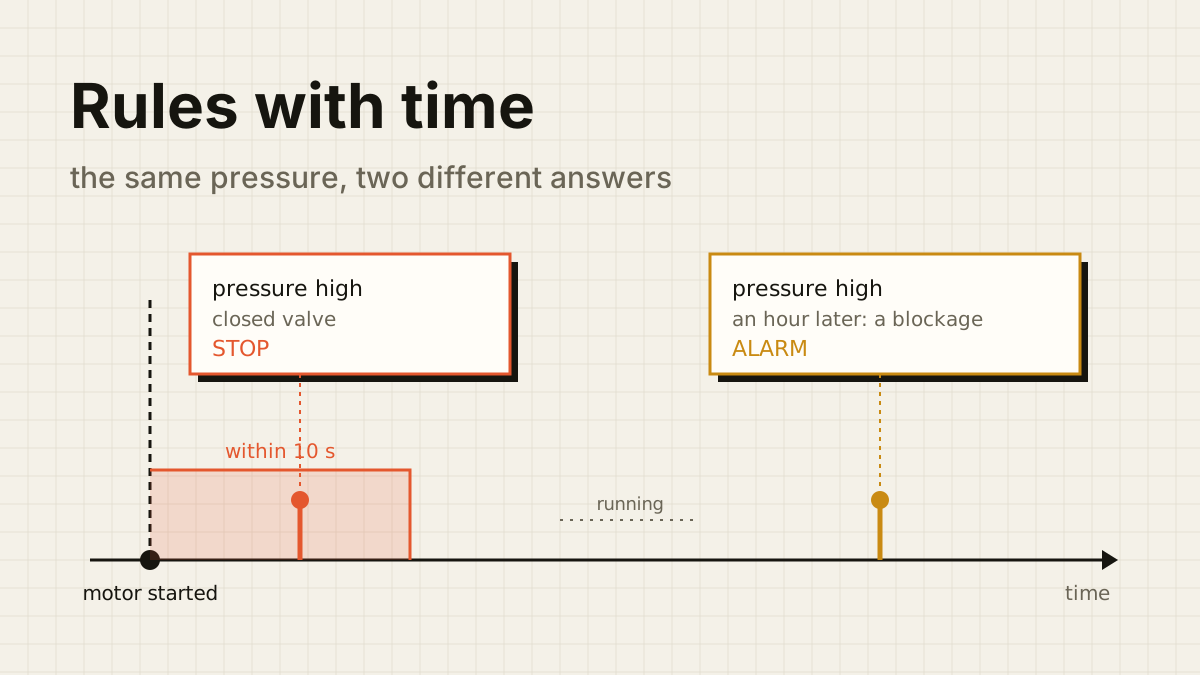 Time
Rules with time: what happened before what, and how often
Many safety rules depend on order and timing. How quorum rulebooks say "within 10 s after", "in the last 5 minutes" and "3 times in an hour".
Read the guide →Reference